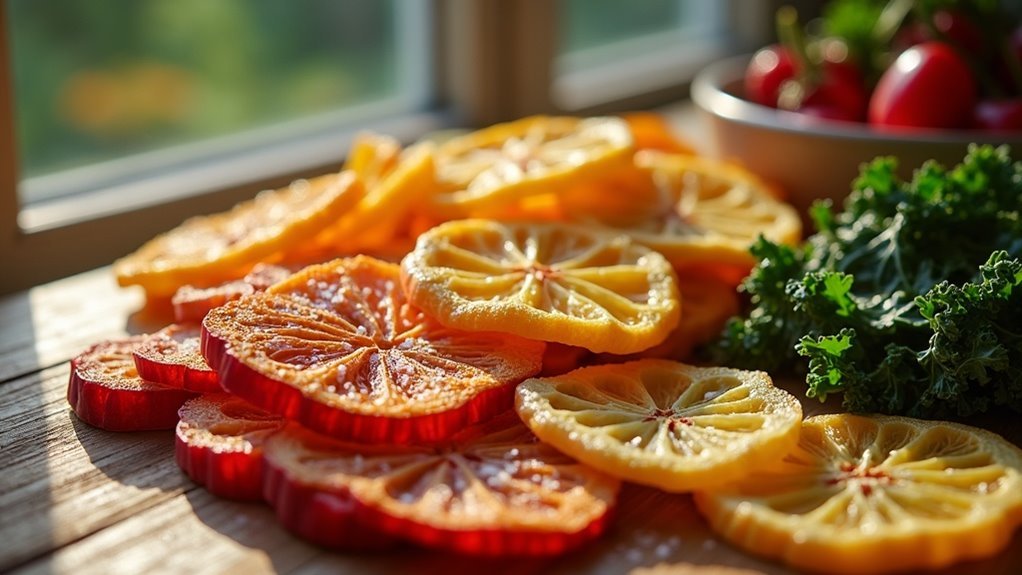
Dehydrating food does impact nutrition, but not as significantly as one might expect, especially in the context of survivalism and prepping. While some water-soluble vitamins, like A and C, may decrease during the dehydration process, minerals and B vitamins typically remain stable. Dehydrated foods can provide concentrated calories and fiber, which are essential for energy during stressful situations or when resources are limited. However, there are risks to consider, such as potential weight gain from calorie-dense foods and hydration issues due to reduced water intake. Understanding the science of dehydration is crucial for survivalists, as it can enhance your food storage strategies while highlighting both the benefits and limitations of dehydrated foods. There’s much more to explore on this topic to ensure you’re well-prepared for any situation.
Key Takeaways
- Dehydration retains essential nutrients, with minimal loss compared to fresh produce, particularly in B vitamins and minerals, making it a valuable technique for long-term food storage in survival situations.
- While water-soluble vitamins A and C may decrease by up to 30% during dehydration, the overall nutritional value remains significant, which is crucial for maintaining health in preparedness scenarios.
- Techniques like freeze-drying and microwave vacuum drying can effectively preserve up to 97% of nutrients, ensuring that your food supplies remain nutrient-rich for extended periods.
- Dehydrated foods offer concentrated calories and dietary fiber, making them an excellent choice for a nutrient-dense diet essential in survival and prepping contexts.
- Proper storage and strategic usage planning are vital to minimize nutrient loss and food waste, ensuring your emergency food supply remains effective.
Nutrition Information
When you choose dehydrated foods for your survival kit, you’re opting for options that retain much of their original nutritional content, including essential calories, protein, fats, and vital vitamins and minerals.
The drying process minimizes nutrient loss, allowing dehydrated produce to maintain its nutritional value longer than fresh produce, which can lose up to 50% of its nutrients shortly after harvest.
While some water-soluble vitamins, like A and C, may diminish, B vitamins and minerals often remain stable.
Dehydrated fruits and vegetables also offer concentrated calories and dietary fiber, making them invaluable for food preservation and enhancing a nutrient-dense diet during emergencies or extended survival situations.
Potential Health Benefits of Dehydrated Food
Dehydrated foods not only preserve nutritional value but also offer several health benefits that make them an essential choice for survivalists and preppers. These foods retain vital nutrients like dietary fiber, which can support better digestion and may activate protective compounds that reduce the risk of certain illnesses.
Here are some key advantages for those preparing for emergencies:
- Effective energy boosts to sustain you during active survival situations
- Lower risk of foodborne illnesses due to reduced moisture, making them safer for long-term storage
- Extended shelf life, ensuring consistent access to a variety of essential nutrients throughout the year
- Enhanced food preservation, maintaining nutritional quality over time, even in challenging conditions
Incorporating dehydrated foods into your stockpile can elevate your overall health, streamline meal planning, and diversify your diet, all crucial for thriving in any preparedness scenario.
Potential Risks of Dehydrated Foods
While dehydrated foods can be a valuable resource for survivalists and preppers due to their convenience and nutrient density, it’s important to recognize the potential risks associated with them.
The dehydration process can result in significant nutritional losses, particularly in vital vitamins like A and C, which can decrease by 30% or more. Furthermore, the reduced water content in these foods may affect your hydration levels, making it crucial to monitor your overall fluid intake, especially during extended periods without fresh water.
The concentrated nature of dehydrated foods can lead to a higher caloric density by weight, which may contribute to unintentional weight gain if consumed excessively.
Additionally, if you’re on medications, it’s wise to consult with healthcare providers, as certain concentrated nutrients could interfere with treatment.
Lastly, consider the impact on food waste; proper storage and usage planning are essential to minimize spoilage and maximize the benefits of your dehydrated food supply.
The Science of Dehydration and Nutrient Preservation
Understanding the science behind dehydration is crucial for survivalism and prepping, as this process not only preserves food but also maintains essential nutrients when executed properly.
Dehydration effectively inhibits microbial growth and spoilage, but it’s important to note that excessive heat can degrade sensitive nutrients like vitamin C.
Consider these vital points for your preparedness strategy:
- Freeze-drying can preserve up to 97% of nutrients, making it an excellent choice for long-term food storage.
- Microwave vacuum drying retains more vitamin C compared to traditional methods, ensuring your food supply is rich in essential vitamins.
- Key nutrients like proteins and antioxidants remain intact during proper drying methods, which can support your health and energy levels in survival situations.
- Utilizing effective drying methods can enhance health benefits and provide an essential energy boost, crucial for those preparing for emergencies.
Data and Comparisons in Nutrient Retention
When evaluating nutrient retention across various dehydration methods for survival and prepping, the evidence highlights significant differences in how well essential vitamins and minerals are preserved—crucial for long-term food storage.
For instance, the dehydration process concentrates vitamin C, with microwave vacuum drying retaining up to 95.4% in broccoli, while air drying only preserves 33.6%.
Microwave vacuum drying retains up to 95.4% of vitamin C in broccoli, far surpassing the 33.6% retention seen with air drying.
Likewise, β-carotene retention in carrots reaches 57.5% with advanced techniques like REV™, compared to less than 17.1% in air-dried samples.
Although some nutrient loss is inevitable, antioxidants remain well-preserved in dehydrated foods, ensuring that you still reap health benefits even with the reduction of certain water-soluble vitamins during drying.
This knowledge is vital for preppers aiming to maintain nutritional value in their long-term food supplies.