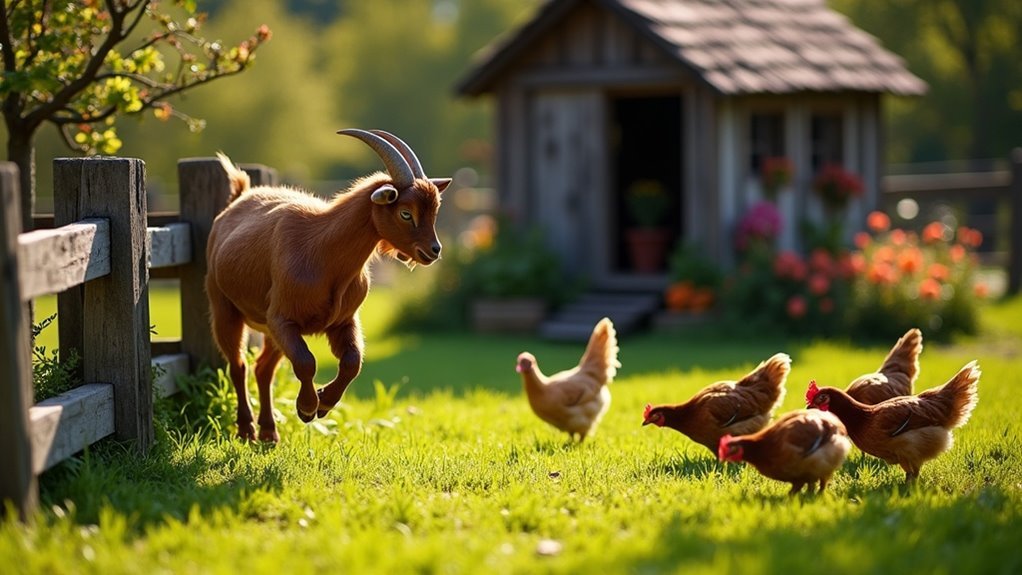
If you’re preparing for self-sufficiency on a small lot, both goats and chickens can be valuable assets. Chickens are excellent for providing a consistent supply of eggs and require minimal space, making them an ideal choice for limited areas. Goats, on the other hand, offer versatility through milk and meat production, while also helping you manage and maintain your land. However, it’s essential to consider factors such as space requirements, waste management, and the associated costs for each type of animal. Understanding the specific needs and benefits of both can significantly enhance your self-sufficiency and overall productivity in a survival situation. There’s much more to learn about the strategic advantages and responsibilities involved in raising these animals.
Key Takeaways
- Chickens require less space, needing only 20-30 square feet for a small flock, making them ideal for small lots and a practical choice for those focused on self-sufficiency.
- Goats require at least 200 square feet per goat plus shelter, which may not be suitable for limited urban spaces, making them less practical for survivalists on small lots.
- Chickens provide a consistent supply of eggs, enhancing food security and self-sufficiency in confined areas, which is crucial for preparedness.
- Goats can help manage land through grazing, but they need more fencing and space to thrive effectively, which may not align with the constraints of small lots.
- Both forms of livestock can contribute to reducing feeding costs, but chickens generally require a lower overall investment and maintenance, making them a more viable option for those preparing for self-reliance.
Overview of Chickens and Goats for Small Lots
When considering livestock for small lots in the context of survivalism and prepping, both chickens and goats offer practical advantages tailored to limited spaces.
Imagining a scenario where resources are scarce, think about how three hens can provide your household with a continual supply of fresh eggs and nutrient-rich manure for composting, enhancing your self-sufficiency.
Three hens can ensure a steady supply of fresh eggs while enriching your compost with nutrient-dense manure, boosting self-sufficiency.
Goats, ideally kept in pairs, can efficiently manage your property by grazing on a modest area, helping to clear brush and maintain the land.
Chickens require just a small coop, while goats need a simple fenced space for grazing.
Both options are invaluable for prepping; chickens help reduce feeding costs by consuming kitchen scraps, and goats can provide milk for essential dairy products.
Ultimately, each type of livestock brings unique benefits that are particularly suited for small lots in a survivalist framework.
Benefits of Raising Chickens
Raising chickens is an essential practice for survivalists and preppers, providing significant benefits that bolster self-sufficiency and enhance food security.
By maintaining even a small flock, you can ensure a reliable source of fresh eggs while simultaneously improving the health of your garden.
Here are some key advantages to consider:
- Consistent Egg Production: A handful of hens can produce 12-18 eggs weekly, providing a nutritious food source.
- Natural Fertilizer: Chickens transform kitchen scraps and organic waste into valuable, nutrient-rich manure, supporting your gardening efforts.
- Space Efficiency: A compact chicken coop only requires 20-30 square feet, making it perfect for urban homesteaders or small survival setups.
Moreover, chickens play a vital role in pest control and contribute to local biodiversity, making them a practical and sustainable addition to any preparedness plan.
Benefits of Raising Goats
Raising goats provides distinct benefits for survivalists and preppers, particularly due to their dual-purpose nature, offering both meat and milk.
These resilient animals are efficient space utilizers; even a small number of goats can effectively manage a sizable area of land while also thriving socially when kept in pairs.
This blend of productivity and companionship makes goats an excellent choice for those looking to enhance their self-sufficiency and preparedness in uncertain times.
Dual Purpose Livestock
When considering livestock for small lots in the context of survivalism and prepping, goats stand out as an outstanding choice due to their dual-purpose capabilities, providing both meat and milk.
Here are some key benefits of raising goats for self-sufficiency:
- Dairy Production: A pair of Nigerian Dwarf goats can yield 1-2 gallons of milk weekly, which can be utilized for making cheese and butter, essential for a sustainable diet during emergencies.
- Social Creatures: Keeping goats in pairs not only boosts their well-being but also enhances their productivity, ensuring a reliable source of food.
- Land Management: Goats are natural grazers that effectively manage weeds and brush, serving as a means of land maintenance and providing organic fertilizer for your garden.
With minimal space requirements, goats can thrive even in urban settings, making them a practical and strategic addition to your survival plan for self-sufficiency and food security.
Space Efficiency Benefits
When considering space efficiency in a survivalist or prepping context, goats stand out as an ideal livestock option for small plots. They thrive in compact areas, with just three goats effectively managing an acre of land. Their minimal housing needs mean that a simple shelter is sufficient to keep them safe and secure. Goats offer multiple benefits—they provide meat, milk, and natural weed control—maximizing the utility of your survival homestead.
| Benefit | Description |
|---|---|
| Space Utilization | Three goats can manage one acre effectively. |
| Minimal Housing Requirements | A simple shelter is all they need for protection. |
| Dual Purpose | They provide meat, milk, and weed control in one. |
With careful management, goats can yield significant production and contribute greatly to your self-sufficiency goals within limited space.
Social Interaction Needs
Goats aren’t only efficient in managing small spaces but also excel in social interaction, making them an excellent choice for survivalists and preppers with limited acreage.
Their playful and curious nature can create a vibrant atmosphere while serving practical purposes. Consider these survival benefits:
- Keeping goats in pairs helps reduce stress and minimizes behavioral issues, making them easier to manage in a prepping scenario.
- Their companionship can lead to increased activity levels, contributing to better health and resilience in the face of challenges.
- Engaging with goats can provide therapeutic joy, which is essential for mental well-being during stressful times.
Integrating goats into your survival plan can enhance both your sustainability efforts and your overall quality of life.
Space Requirements for Chickens and Goats
Choosing between chickens and goats for small lots requires careful consideration of their space needs, especially in a survivalist or prepping context.
Chickens are suitable for limited areas, needing just 2-3 square feet per bird in a coop and 8-10 square feet in an outdoor run. A small flock of three hens can easily thrive in your backyard, providing a reliable source of eggs and meat.
In contrast, goats require considerably more space—at least 200 square feet per goat, plus shelter. If you keep them in pairs, your space requirements will increase accordingly.
Both animals can adapt to urban and suburban environments, but careful planning is essential to ensure they’ve enough room to live comfortably and contribute to your self-sufficiency.
Proper space allocation is crucial for maintaining healthy livestock that can support your prepping goals.
Managing Waste: Chicken Manure vs. Goat Manure
While both chicken and goat manure can greatly benefit your survival garden, understanding their differences is crucial for effective waste management in your prepping strategy. Here are some key points to evaluate:
– Chicken manure is “hot” and requires composting to prevent burning plants, making it essential for those preparing for long-term sustainability.
In contrast, goat manure is “cool” and can be used directly, providing immediate benefits for your garden.
– Chicken manure is packed with nitrogen, phosphorus, and potassium, which can enhance crop yields significantly.
On the other hand, goat manure improves soil structure and moisture retention, vital for maintaining a resilient garden during tough times.
– Goat pellets are easier to handle, producing less odor and fewer pest issues than chicken manure, which can attract rodents if not managed properly—an important consideration for anyone focused on self-sufficiency and security.
Choose wisely based on your garden’s needs and the space limitations of your survival plan!
Cost Considerations for Chickens and Goats
When considering the costs involved in raising chickens or goats for your survival and prepping needs, it’s crucial to factor in both initial and ongoing expenses.
Establishing a small flock of chickens may require an investment of $100 to $300, while goats can cost between $200 and $500 each, in addition to fencing for security and containment.
Investing in a small flock of chickens ranges from $100 to $300, while goats typically cost between $200 and $500 each.
Chickens can provide a reliable source of protein through their eggs, producing 3-5 eggs weekly at a feed cost of only $3 to $5 monthly.
Goats serve as a dual-purpose asset, offering both meat and milk, with a dairy goat capable of yielding 1 to 3 gallons daily, which can be vital for self-sufficiency.
Long-term costs for both livestock involve health care and bedding, averaging around $200 annually, which should be factored into your preparedness budget to ensure a sustainable food source.
Integration Into Urban and Suburban Settings
Integrating livestock like chickens and goats into urban and suburban settings can significantly enhance food security and self-sufficiency, especially for those focused on survivalism and prepping. Here are some key considerations:
– Chickens are well-suited for limited spaces; just three hens can provide a household with a steady supply of fresh eggs while requiring minimal maintenance.
They also serve as a reliable protein source in times of scarcity.
- Goats require more space but are incredibly beneficial for vegetation control and can provide both milk and meat, making them a versatile asset for any prepper’s homestead.
- Both chickens and goats can consume kitchen scraps, reducing feed costs and promoting a sustainable cycle of food production.
Before you start, it’s crucial to check local regulations—while chickens are often permitted, goats may require special zoning permissions.
Thoughtful planning and adherence to local laws will ensure a successful and sustainable integration of livestock into your prepping strategy.