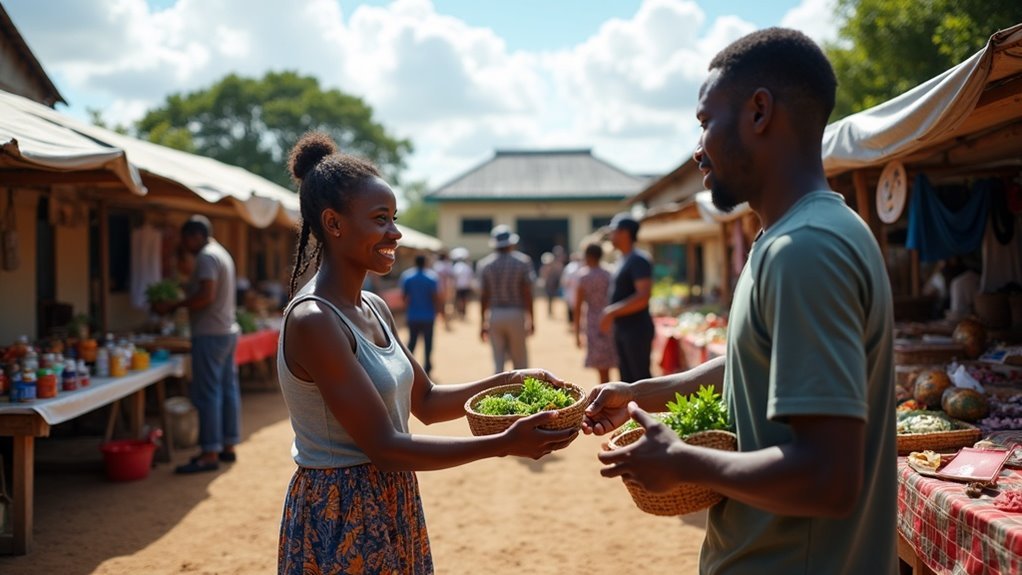
Barter systems are a vital tool in survivalism and prepping, especially during modern disasters when traditional currency may lose its value. In times of crisis, your ability to trade essential goods and services—such as food, water, and medical supplies—can be crucial for ensuring your survival. Establishing strong community connections is essential for effective resource sharing, while fostering trust among barter partners helps facilitate fair exchanges.
However, it’s important to be aware of the challenges that come with bartering, such as assessing the value of items and managing perishables. By understanding these dynamics and preparing accordingly, you can enhance your resilience and adaptability in tough situations. Further exploration of barter strategies will equip you with the knowledge to thrive in emergencies and build a more self-sufficient lifestyle.
Key Takeaways
- Barter systems facilitate the direct exchange of essential goods during crises, effectively reducing the impact of currency devaluation in survival situations.
- They strengthen community ties through mutual aid, fostering cooperation and solidarity among preppers in times of need.
- Skills and resources become vital trading assets, enhancing both individual and community resilience in the face of disasters.
- Bartering ensures continued access to critical supplies when traditional supply chains are disrupted, an essential practice for survivalists.
- Effective communication and trust are crucial for successful barter transactions and resource sharing, key components of a strong survival network.
Understanding the Barter System
When financial systems break down during a disaster, understanding the barter system becomes crucial for survivalism and prepping. This system operates by allowing individuals to exchange goods and services directly, bypassing cash altogether.
In an emergency situation, the principles of supply and demand shift dramatically; necessities like food and medical supplies gain higher value than luxuries. As a prepper, you’ll need to assess what skills and resources you have to offer and what you need, fostering relationships within your community.
The Importance of Barter in Crisis Situations
In crisis situations, bartering becomes a crucial survival strategy, enabling you to exchange essential goods such as food, medical supplies, and other resources when currency loses its value.
By trading skills and items, you not only fulfill immediate survival needs but also reinforce community bonds, which are vital for resilience in the face of future challenges.
Understanding and utilizing the power of bartering can empower you and your community to navigate hardships more effectively, ensuring preparedness for any eventuality.
Embrace bartering as an essential tool in your survival and prepping toolkit.
Essential Goods Exchange
As crises unfold and traditional systems break down, the barter system emerges as a crucial lifeline for survivalists and preppers seeking essential goods and services. It empowers you to exchange food, water, and medical supplies directly, bypassing monetary limitations that may become irrelevant in times of emergency. Historical examples illustrate how bartering not only meets immediate needs but also builds community resilience, fostering networks of mutual aid among those prepared for unforeseen challenges.
| Essential Goods | Barter Value |
|---|---|
| Canned Foods | High |
| Hygiene Products | Moderate |
| Medical Supplies | Critical |
| Skills (e.g., Repair) | Valuable |
Skills for Survival
Bartering goes beyond simply exchanging goods; it involves leveraging essential skills that can be crucial during survival situations.
In times of crisis, your expertise in areas such as carpentry, plumbing, or medical assistance becomes highly valuable trade assets. When traditional supply chains break down, these skills can help you acquire vital resources like food and water.
Building a network of reliable individuals not only enhances your overall preparedness but also provides access to necessary support during emergencies. Historical instances demonstrate that communities flourish when they effectively barter skills, creating a robust framework for survival.
Community Resilience Building
When traditional systems break down during emergencies, communities often turn to bartering as a crucial survival strategy.
Barter systems bolster community resilience by facilitating the exchange of essential goods and services when cash is limited. Here are three key ways bartering aids in survival situations:
- Immediate access to food, water, and medical supplies when supply chains are compromised.
- Enhanced community bonds through reciprocal exchanges that foster trust and collaboration.
- Crisis preparedness by stockpiling universally valuable items, which improves your community’s ability to respond effectively.
How Barter Systems Work During Emergencies
During emergencies, utilizing barter systems can significantly enhance your survival strategy by allowing you to engage in direct exchanges for essential goods such as food, water, and medical supplies.
Trading your skills or services, such as mechanical work, gardening, or first aid, can be vital in meeting immediate needs while fostering a sense of community resilience.
Understanding the true value of your resources and skills enables you to negotiate effective trades that benefit not just yourself, but also others in your survival network.
Embracing a barter system can be a key component of your prepping plan, ensuring you’re better equipped to navigate crises.
Direct Exchanges for Essentials
In the chaos of emergencies, the ability to directly exchange essential goods and services can become a lifeline for communities in distress. Barter systems empower survivalists to bypass cash limitations, ensuring immediate access to crucial resources.
Here are three key benefits of direct exchanges during crises for those who are prepared:
- Adaptability: Quickly adjust to urgent needs by trading surplus items like preserved food, water purification supplies, or hygiene products, ensuring your community’s survival.
- Value Shift: Recognize that food, clean water, and medical supplies become the most valuable barter commodities during a crisis, highlighting the importance of stockpiling these essentials.
- Trust Building: Established relationships within the prepping community enhance negotiation effectiveness and security, ensuring essential goods reach those who need them most, reinforcing the bonds of mutual support and preparedness.
Skills and Services Trading
While many may overlook the value of trading skills and services in emergencies, this practice can be a game changer for survivalists and preppers. In crisis situations, bartering allows you to exchange your expertise—like plumbing or medical assistance—for essential goods that can sustain you and your community. The effectiveness of this system relies heavily on trust and established relationships within your survival network. Here’s a simple overview of valuable skills and services during emergencies:
| Skill/Service | Goods Offered | Value in Crisis |
|---|---|---|
| Plumbing | Water, Food | High |
| Medical Aid | Medicine, Food | Critical |
| Carpentry | Shelter, Tools | Essential |
Flexibility and negotiation are key to maximizing the benefits of this system!
The Role of Money in a Crisis
As trust in currency erodes, particularly during crises, the role of money can rapidly transform from a dependable medium of exchange to an unreliable tool for survival.
In emergencies, you may encounter restricted access to cash and a significant decline in its value. During such times:
- Essential supplies, like food, water, and medical provisions, take precedence over cash.
- Historical scenarios illustrate how communities revert to bartering for vital necessities when traditional monetary systems fail.
- Banking disruptions reveal the critical limitations of money in securing the resources you need for survival.
Understanding these dynamics is crucial for survivalists and preppers, emphasizing the necessity of adaptability and resourcefulness in procuring essential supplies during crises.
Benefits of Bartering in Times of Need
When traditional financial systems break down, bartering becomes an essential survival strategy, allowing you to secure your basic needs without depending on cash.
In times of crisis, you can directly exchange goods you possess for those you require, fostering a sense of community and cooperation among fellow preppers.
Bartering empowers you to navigate the high demand for essential supplies, ensuring that perishable items can be traded for critical resources like food and medical care.
This system operates independently of disrupted supply chains, providing immediate access to necessities that can be vital for survival.
Modern Examples of Barter Systems
Bartering has emerged as a vital strategy in the survivalist and prepping communities, demonstrating its effectiveness in sustaining individuals and groups when traditional systems break down.
Bartering proves essential for survivalists, offering a lifeline when conventional systems falter and ensuring resource sustainability.
Here are three notable examples:
- During the COVID-19 pandemic, online barter platforms allowed preppers and neighbors to exchange essential survival items and services, ensuring access to food, medical supplies, and other necessities when stores were depleted.
- Following Hurricane Katrina, survivors engaged in informal trading of food, water, and tools, effectively addressing immediate needs and fostering self-reliance in the face of disrupted supply chains.
- Greece’s economic crisis led to the establishment of structured barter networks, where individuals exchanged goods and services, reinforcing community bonds and promoting resilience without relying on cash.
These instances underscore how bartering can enhance community preparedness, ensuring access to crucial resources and fostering self-sufficiency in times of crisis.
Challenges and Risks of Bartering
While the benefits of bartering can be significant during disasters, various challenges and risks can complicate the process for survivalists and preppers.
Determining fair value amidst fluctuating supply and demand can create confusion in high-pressure situations. Dividing items, such as live animals or critical gear, complicates transactions, while perishable goods require timely exchanges to avoid spoilage.
Additionally, mutual interest in valuable items is essential; mismatched needs can severely limit trading opportunities when resources are scarce.
Lastly, showcasing these items can increase the risk of theft in vulnerable situations, making security a top priority.
To navigate these challenges effectively, it’s crucial to remain vigilant, prioritize safety measures, and cultivate open communication within your community.
This approach will help create successful barter exchanges that genuinely meet your preparedness needs.
Strategies for Building Effective Barter Networks
Navigating the intricacies of bartering can be daunting, particularly in times of crisis.
However, establishing robust barter networks can significantly bolster community resilience by facilitating the exchange of vital resources.
Here are key strategies tailored for survivalists and preppers:
- Create a Platform: Develop a dedicated space, either physical or digital, where community members can connect, discuss trades, and build rapport, ensuring everyone is prepared for emergencies.
- Organize Events: Host barter markets or swap meets specifically designed for survival gear, food supplies, and other prepping essentials to enhance visibility and encourage resource sharing.
- Set Guidelines: Formulate clear rules that prioritize fairness and safety to foster trust among participants, ensuring that trades are beneficial and equitable for all involved.