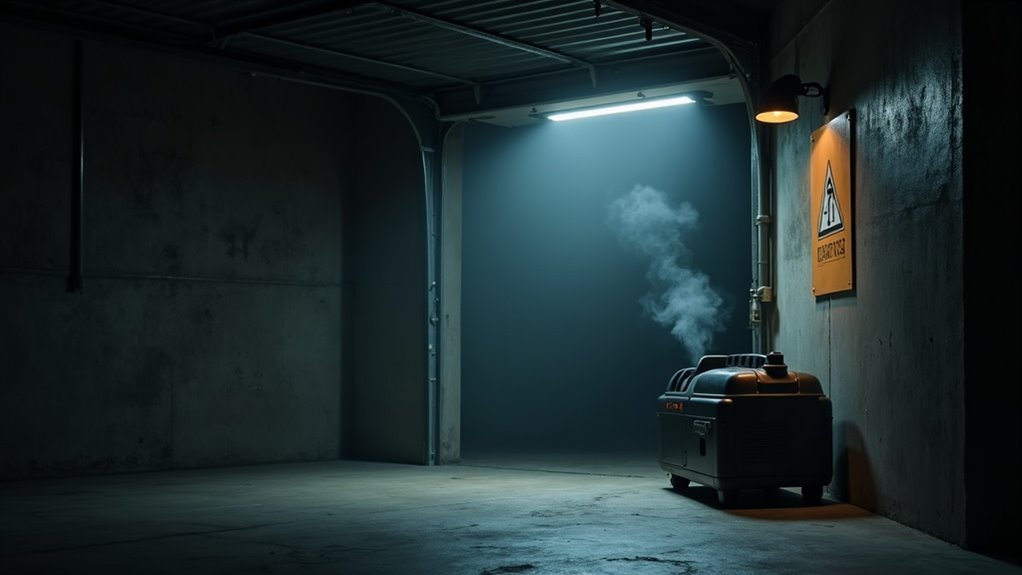
Running a generator in a garage is not safe, especially for those who prioritize survivalism and prepping. Even with the door open, carbon monoxide can build up quickly, presenting a significant poisoning risk that can jeopardize your safety and preparedness. The gas is odorless and invisible, making it difficult to detect until it’s too late. Furthermore, the risk of fire and explosion escalates in enclosed spaces where fuel vapors can ignite, potentially compromising your survival setup. To ensure your safety and maintain a secure environment, it’s vital to operate generators outdoors. Exploring safe generator practices is crucial for anyone focused on being self-reliant and prepared for emergencies.
Key Takeaways
Running generators in garages can pose serious risks to survivalists and preppers due to the dangers of carbon monoxide exposure and fire hazards. Even with the garage door open, the lack of proper ventilation can lead to dangerous levels of carbon monoxide, which is an invisible and odorless gas that can quickly become a silent killer in enclosed spaces.
In the context of prepping, it’s crucial to understand that using a generator indoors, or in poorly ventilated areas, significantly increases the risk of fires and explosions—especially when flammable materials are present. While some may consider using exhaust fans for ventilation, these solutions are often inadequate and do not eliminate the hazards.
For the safety of yourself and your loved ones, always operate generators outdoors. Position them at least 20 feet away from any structures to minimize risks and ensure that you are prepared for any emergency situation safely. Remember, in survival scenarios, safety should always be your top priority.
The Risks of Running a Generator Indoors
While it might appear convenient to run a generator in your garage during an emergency, this practice carries serious risks, particularly due to the dangerous buildup of carbon monoxide (CO).
This invisible, odorless gas can infiltrate your living space, leading to a deceptive sense of safety. Even with the garage door open, the toxic fumes can accumulate, posing a significant health threat.
Carbon monoxide is an invisible, odorless threat that can silently invade your home, even with ventilation. Stay safe.
Additionally, generators generate high temperatures, which can heighten the risk of fire if flammable materials are nearby. Operating a generator indoors is inherently unsafe, regardless of the ventilation.
To ensure your safety and that of your loved ones, always position generators at least 20 feet away from any structures. This proactive measure will help you avoid the perilous effects of carbon monoxide exposure while also preparing for any survival situation.
Understanding Carbon Monoxide Hazards
Understanding the hazards of carbon monoxide (CO) is crucial for survivalists and preppers, particularly when using equipment like generators that can emit this dangerous gas.
Even with the garage door open, toxic gas can accumulate quickly due to inadequate ventilation, posing severe risks of CO poisoning. Symptoms such as headaches, dizziness, and confusion can escalate rapidly in enclosed spaces, making it imperative to be vigilant.
The National Institute for Occupational Safety and Health (NIOSH) strongly advises against running a generator in the garage, highlighting the necessity of proper airflow.
As part of your preparedness plan, installing CO alarms is essential for detecting dangerous levels of carbon monoxide, ensuring your safety while utilizing generators during emergencies.
Stay informed, prepared, and cautious to protect yourself and your loved ones.
Fire and Explosion Risks Associated With Indoor Use
Using a generator indoors, particularly in a garage, significantly heightens the risk of fire and explosion, which is crucial to consider for survivalists and preppers.
Enclosed spaces amplify fire hazards, as fuel vapors can easily ignite from sparks or flames. Additionally, the confined environment can lead to overheating, since generators require proper airflow for cooling.
Enclosed spaces increase fire risks, as fuel vapors can ignite easily, and generators need proper airflow to prevent overheating.
Refueling a running generator introduces further risks, as any spills may ignite from the generator’s heat.
Statistics reveal that improper indoor usage is a predominant cause of residential fires, underscoring the necessity for strict adherence to safe operational practices.
Always prioritize safety and avoid using generators in enclosed areas to ensure your preparedness plans remain intact.
Evaluating Ventilation Solutions for Garage Use
When evaluating ventilation solutions for generator use in a garage, it’s crucial to understand that merely opening the garage door is insufficient for ensuring safety. Natural airflow often fails to effectively disperse carbon monoxide (CO), which can lead to a dangerous accumulation of this toxic gas.
Even with the door open, CO can easily seep back into your home through cracks and vents, posing a serious risk to your family’s safety.
To enhance safety during power outages or emergencies, consider implementing active ventilation systems such as exhaust fans or dedicated ducts to manage airflow.
Additionally, while placing the generator near windows or vents may help with air circulation, the safest practice remains to operate generators outdoors.
As part of your preparedness strategy, it’s essential to evaluate and implement proper ventilation solutions to mitigate the significant risks associated with CO exposure in enclosed spaces.
Prioritizing safety in your survival plans is key to ensuring your family’s well-being during critical situations.
Best Practices for Safe Generator Placement
To ensure the safe operation of your generator during emergency situations, always position it outdoors, ideally at least 20 feet away from your home and any other structures. Open garage doors do not provide adequate safety, as they fail to ensure sufficient ventilation for exhaust fumes. Consider using a weatherproof enclosure to protect your generator from the elements while maintaining proper airflow. It’s crucial to place the generator on level ground to prevent tipping and to avoid any wet or flooded areas. Regular maintenance is vital to keep your generator in optimal condition, and installing carbon monoxide detectors nearby can significantly enhance your safety during power outages.
| Best Practices | Description |
|---|---|
| Outdoor Placement | At least 20 feet from structures |
| Weatherproof Enclosure | Protects from rain while allowing ventilation |
| Level Ground | Reduces risk of tipping |