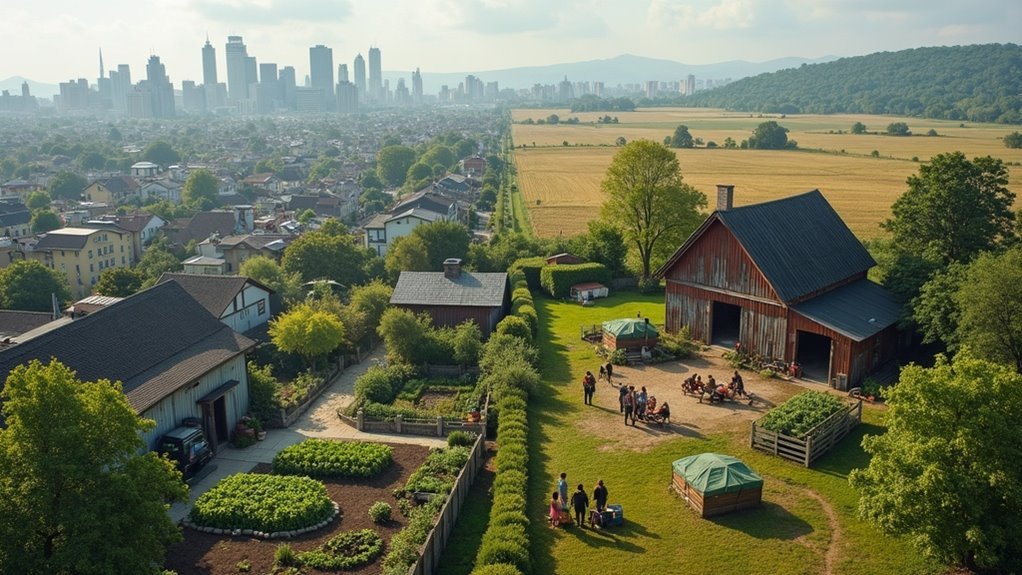
Yes, urban preppers and rural preppers face different challenges and advantages. Urban preppers must navigate high population density, competition for resources, and increased crime rates, making security a paramount concern. In contrast, rural preppers benefit from abundant natural resources and typically lower crime rates, but they often contend with isolation and limited access to communication. Both groups must cultivate community support and develop adaptive strategies to enhance their survival in emergencies. Understanding these differences is crucial for tailoring effective survival tactics in various environments.
Key Takeaways
- Urban preppers navigate high population density, which results in increased competition for resources and heightened safety risks during emergencies.
- Rural preppers enjoy access to abundant natural resources and stronger community support, which promotes collaboration and resilience in times of crisis.
- Urban areas typically experience higher crime rates, prompting urban preppers to implement enhanced home security measures.
- Communication infrastructure tends to be more robust in urban settings, facilitating quicker access to vital information compared to rural locations.
- Urban preppers often emphasize stealth and mobility in their strategies, while rural preppers concentrate on sustainable practices and the utilization of local resources.
Infrastructure and Resources
When it comes to survivalism and prepping, the infrastructure and resources available in urban and rural settings can greatly impact your strategy.
In urban areas, dense infrastructure allows for quick access to supplies, but it complicates food production during disasters. You can stock up online, but be wary of potential supply chain disruptions that could leave you vulnerable.
Conversely, rural settings offer abundant natural resources like lakes and greenery, but you may lack access to commercial goods and efficient transit options. Water access is generally easier in rural areas compared to urban alternatives such as pools or water heaters.
Understanding these differences is crucial for effectively tailoring your prepping approach. Choose your resources wisely to enhance your chances of survival!
Population Dynamics
As you navigate the world of survivalism and prepping, understanding population dynamics becomes essential, especially when comparing urban and rural environments.
Urban prepping often involves high population density, leading to intense competition for resources during emergencies. In cities like New York, desperation can escalate quickly, impacting safety and security.
Urban prepping faces fierce competition for resources, with high population density in cities like New York heightening risks to safety and security.
Conversely, rural areas tend to foster closer-knit communities that can collaborate and support each other in times of crisis.
While urban preppers may prioritize enhanced security measures due to increased crime risks, rural preppers must remain vigilant against potential threats.
Recognizing these dynamics is crucial for tailoring your survival strategy effectively.
Crime Rate and Safety Threats
While urban areas often provide access to valuable resources, they also come with elevated crime rates that can pose significant threats during emergencies.
As an urban prepper, it’s crucial to fortify your home security to safeguard against individuals who may resort to desperate measures in search of supplies. The high population density in cities increases the likelihood of confrontations, making personal safety your top priority.
On the other hand, rural prepping typically involves lower crime rates; however, rural preppers should remain vigilant against transient populations that may pose risks.
Understanding these varying threats is vital—urban preppers primarily face dangers posed by other individuals, while rural preppers may need to contend with wildlife hazards.
Stay alert, stay informed, and always be prepared!
Communication and Information Access
Effective communication and access to information are paramount during any emergency, especially for preppers navigating the complexities of urban or rural living.
In urban environments, you can leverage a robust communication infrastructure, enabling swift access to news and alerts. However, during power outages, having backup systems like satellite phones, hand-cranked radios, or even walkie-talkies can ensure your connectivity remains reliable.
Conversely, rural areas may experience delays in receiving updates due to limited infrastructure, making it crucial to have alternative sources for information.
Regardless of your location, mastering effective communication strategies—such as improvised signaling methods, message drops, or pre-planned meeting points—can significantly enhance your ability to maneuver through chaotic situations and stay informed during emergencies.
Being prepared and adaptable is key to survivalism and effective prepping.
Unique Challenges and Community Support
Navigating the distinct challenges of survivalism and prepping demands an acute awareness of your surroundings and the community you inhabit.
Urban preppers encounter intensified competition for resources and increased safety risks due to higher population density, making community support essential. Conversely, rural preppers often face isolation, where robust local networks can offer critical assistance and resource sharing.
Urban preppers face resource competition and safety risks, while rural preppers benefit from local networks against isolation.
Both urban and rural preppers stand to gain from collaboration and the exchange of knowledge, which significantly boosts their overall readiness. Urban preppers should prioritize stealth and mobility in their strategies, while rural preppers can concentrate on sustainable practices.
Engaging with your community—regardless of whether you live in an urban or rural setting—fortifies resilience and nurtures mutual support in times of crisis.