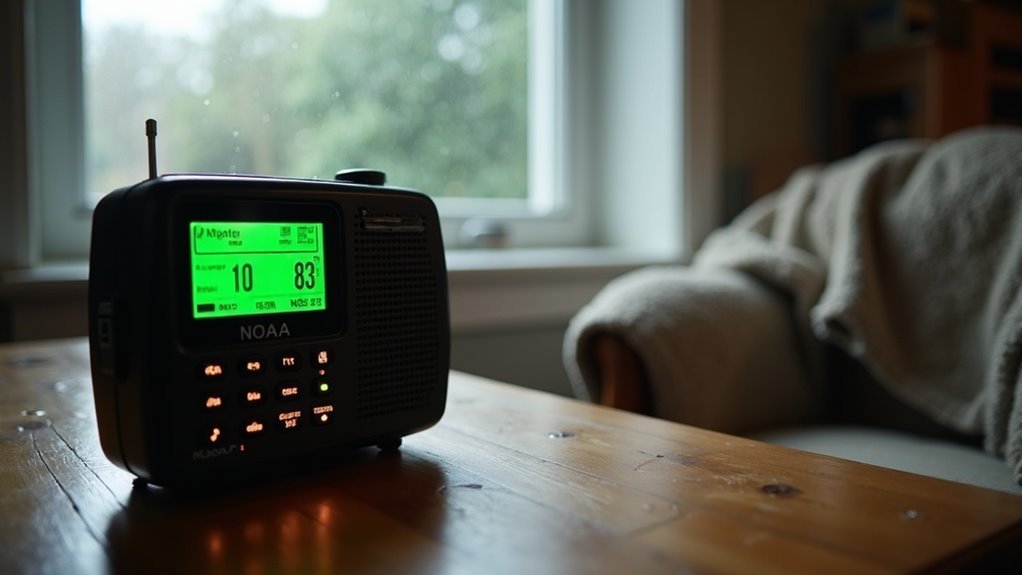
Yes, a NOAA Weather Radio is a crucial tool for survivalism and prepping, and it works independently of the internet. This reliable device provides essential weather alerts directly from the National Weather Service, ensuring you stay informed during emergencies. It operates on battery power, making it functional even during power outages—a vital feature for preppers. With S.A.M.E. technology, you receive accurate and localized alerts tailored to your specific area, which is critical for effective emergency planning. Regularly checking the settings and batteries is essential for maintaining its reliability. If you’re serious about preparedness, there’s plenty more to learn about optimizing your NOAA Weather Radio to enhance your survival strategy.
Key Takeaways
- NOAA Weather Radios are essential tools for survivalists, operating independently of the internet to ensure you have constant access to crucial weather information.
- They provide continuous broadcasts of alerts from the National Weather Service, making them a reliable resource even without internet connectivity.
- These radios are particularly valuable during power outages, as they can be powered by batteries, ensuring you remain informed during emergencies.
- Specifically designed to receive NOAA broadcasts, NOAA Weather Radios deliver timely alerts that can be vital for preparedness.
- The S.A.M.E. technology enables tailored alerts based on your geographic location, allowing you to receive relevant information without relying on the internet.
Basics & Functionality
NOAA Weather Radios are indispensable tools for survivalists and preppers seeking reliable access to crucial weather information, particularly during emergencies.
These radios function independently of the internet, ensuring that you receive continuous broadcasts directly from the National Weather Service. They remain operational during power outages, as they can be powered by batteries, thereby guaranteeing access to essential weather alerts even when electricity is unavailable.
NOAA Weather Radios provide reliable, battery-powered weather alerts directly from the National Weather Service, even during power outages.
Unlike standard radios, NOAA Weather Radios are specifically engineered to receive NOAA broadcasts, delivering accurate and timely information vital for preparedness.
Equipped with S.A.M.E. technology, these radios provide alerts tailored to your specific geographic area, enhancing your readiness without the need for internet connectivity.
Programming & Setup
When setting up your NOAA Weather Radio, it’s crucial for survivalists and preppers to program it correctly to receive the most pertinent alerts.
Start by entering Specific Area Messaging Encoding (S.A.M.E.) county codes to ensure you receive localized weather notifications tailored to your preparedness plans. These codes can be found on the NWS S.A.M.E. listing.
During setup, navigate through the menu to configure your location settings, enabling alerts for your primary county while minimizing notifications from other areas that don’t impact your survival strategy.
Regularly check your settings and batteries to maintain optimal functionality, especially during emergencies when internet access may be compromised.
Staying informed and prepared with accurate weather updates is key to surviving unexpected situations.
Alerts & Troubleshooting
While staying informed is crucial during emergencies, ensuring your NOAA Weather Radio operates effectively is vital for any survivalist or prepper. These radios function independently from the internet, providing direct alerts from the National Weather Service, which can be a lifeline during a crisis.
If you’re not receiving alerts, first check the ON/OFF switch and confirm you’ve set the correct NOAA frequency. Ensure that the transmitter in your area is operational, as this is essential for receiving timely information.
Check the ON/OFF switch, verify the NOAA frequency, and ensure your local transmitter is operational for timely alerts.
Make use of S.A.M.E. programming to receive alerts specifically tailored to your location, which enhances your preparedness. If issues persist, review your settings; you mightn’t be in a designated warning area.
Regular maintenance of your NOAA Weather Radio is key to staying updated on critical weather information, ensuring you’re ready to respond when it matters most.
County & Location Settings
Understanding how to configure your NOAA Weather Radio for county and location settings is crucial for survivalists and preppers who prioritize timely alerts in emergencies.
The radio utilizes S.A.M.E. (Specific Area Messaging Encoding) to provide alerts tailored to your specific area. To set this up, locate your county code on the National Weather Service (NWS) website. It’s essential to set location #1 to your home county to ensure you receive relevant notifications.
For a streamlined experience, switch your radio to SINGLE mode and eliminate any unnecessary counties through the MENU. This proper configuration allows you to concentrate on critical alerts during severe weather events, significantly enhancing your preparedness and response strategies.
Reset & Power
Resetting and powering your NOAA Weather Radio is a crucial step in ensuring you remain connected to vital weather updates, especially during emergencies when every second counts.
If you encounter any issues, begin by unplugging the device, inspecting the AA batteries, and then press and hold the WEATHER/SNOOZE button while reinserting a battery to reset models like the WR120.
It’s important to note that during a power outage, your radio will still operate on batteries, which generally last about 2 days on standby.
To ensure your preparedness, replace these batteries annually to keep your device functioning at its best when you need it most.
A reliable NOAA Weather Radio is an essential component of your survival toolkit, providing critical alerts to help you stay safe and informed.